
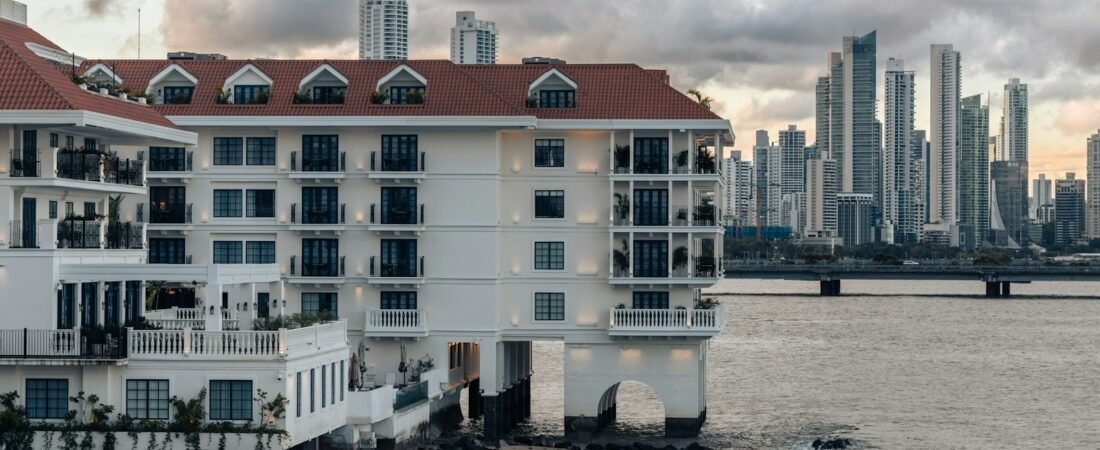
Four airlines that fly out of Canada will let you break a trip to Latin America at their hub and stay there for nothing extra on the airfare. The published windows range from 24 hours in Bogota to 15 days in Panama City, a difference of fifteen to one. For anyone flying south to see family, that is the difference between an airport hotel and a second holiday.
The trip is familiar to a few hundred thousand households in Canada. Once a year, or once every two years, you fly to Sao Paulo or Lima or Buenos Aires to see your parents. The ticket is expensive, the flight is long, and the itinerary is built around other people’s calendars. What most travellers do not check is whether the airline will let them stop somewhere on the way at no additional airfare cost.
Several will. The mechanism is called a stopover programme, and it exists because hub airports and their tourism boards want transit passengers to leave the terminal and spend money in the city. The airline gives up nothing it was going to earn anyway, since you were already routing through that airport. The published terms are specific, they are not secret, and they are almost never surfaced during a normal flight search.
A stopover is not a layover, and the difference is measured in hours
The words get used interchangeably, but in airline pricing they are different products. A layover is the connection you are given: you land, you wait, you board the next flight, usually in the same terminal and often without clearing immigration. A stopover is a deliberate break in the journey, generally longer than 24 hours on an international itinerary, that you ask for before the ticket is issued.
That last clause is where most people lose the benefit. Every programme reviewed here requires the stopover to be requested at the time of the original purchase. You cannot buy a normal ticket and convert it later, and a long connection that the booking engine happens to offer you is not the same thing as an authorised stopover with the baggage and rebooking treatment that goes with it.
The four stopover programmes reachable from Canada
All four hubs below are served nonstop from Toronto, and three of the four from Montreal. The stay lengths are the ones each programme publishes on its own pages, checked in August 2026.
| Programme | Hub | Maximum stay at no extra airfare | Extra costs the programme documents |
|---|---|---|---|
| Panama Stopover (Copa Airlines) | Panama City (PTY) | 15 days | About US$50 in Panamanian entry and exit taxes. A second stopover costs up to US$250 plus taxes. |
| Portugal Stopover (TAP Air Portugal) | Lisbon or Porto | 10 days | None stated on the programme page. TAP adds a 25% discount code for one domestic flight in Portugal. |
| Mexico City Stopover (Aeromexico) | Mexico City (MEX) | 7 days, as reported at launch | Not documented. The airline’s own programme page was unavailable when we checked. |
| Stopover Bogota (Avianca) | Bogota (BOG) | 24 hours | None stated. Booked by filtering for the stopover option on Avianca’s own booking page. |
Put side by side, the spread is the story. Panama’s window is fifteen times Bogota’s. A 24 hour stopover is one dinner, one night and one morning, which is a genuine look at a city but not a holiday. Fifteen days is long enough to see the canal, cross to the Pacific side, and still arrive in Lima on the ticket you already bought.
What “free” leaves out
The airfare is what these programmes waive. Everything else behaves normally, and in one case there is a documented floor cost that the marketing does not lead with.
The Panama Stopover terms state plainly that the passenger pays Panama’s entry and departure taxes, listed as codes FZ, AH and F3, at roughly US$50. Converted at the Bank of Canada’s daily rate for August 21, 2026, of 1.3760 Canadian dollars to the US dollar, that is about C$68.80 per traveller before a single night of accommodation. A second stopover on the same ticket, priced at up to US$250 plus taxes, works out to roughly C$344.00 at the same rate. Neither number is hidden, but neither appears next to the word free.
The baggage rule is the other detail worth reading twice. Copa’s terms note that the standard free allowance applies and that excess baggage charges can be applied again when you check your bags at Tocumen after the stopover. Anyone flying south with the usual load of things for relatives should price that in, because a stopover means handing your suitcases over a second time.
For much of Brazil, the free stopover route runs through Lisbon
Here is the result that surprised us. If your family is in Sao Paulo, the Latin American hubs serve you well. If your family is anywhere else in Brazil, the network with the deepest reach and an attached stopover programme is European.
TAP Air Portugal’s own destinations page lists 15 Brazilian cities: Belem, Belo Horizonte, Brasilia, Curitiba, Florianopolis, Fortaleza, Maceio, Manaus, Natal, Porto Alegre, Recife, Rio de Janeiro, Salvador, Sao Luis and Sao Paulo. The same page lists exactly two Canadian cities, Toronto and Montreal. That is a one connection path from Canada to fifteen Brazilian airports, several of which, Sao Luis and Belem among them, are awkward to reach any other way without a domestic Brazilian flight bolted on.
The stopover attached to that path allows up to 10 days in Lisbon or Porto. For a family visit to the Northeast, the practical comparison is not Lisbon against Panama. It is a free stop in Portugal against a paid domestic connection inside Brazil.
The low cost hub with no stopover programme at all
Arajet, the Dominican low cost carrier, is the other name worth knowing, and it works on a different logic. It runs no stopover programme. What it has is a hub in Santo Domingo with direct service to both Toronto and Montreal.
Counting the destination entries on Arajet’s Where We Fly page in August 2026 gives 27 places, of which 10 are in South America: Buenos Aires, Cordoba, Mendoza and Rosario in Argentina, Bogota, Cartagena and Medellin in Colombia, plus Sao Paulo, Lima and Santiago. Four Argentine cities is the number that stands out. Rosario, Mendoza and Cordoba are exactly the sort of secondary cities that people actually come from, and that legacy carriers reach from Canada only by selling you a connection in Buenos Aires.
Arajet does sell these as single ticket connections. Its help pages describe passengers being handled from origin to final destination, with baggage checked through and the connection made through a transit security check in Santo Domingo rather than full immigration. That is a connection, not a stopover. If you want days in the Dominican Republic, you break the trip into two bookings and accept that no airline is protecting you if the first one runs late.
That trade is the whole calculation with a low cost carrier. Two separate tickets give you a stop of any length you like, and they give you all of the risk.
The paperwork decides whether any of this works for you
This is the part that matters most for readers who hold a Latin American passport, a Canadian one, or both, and it is the part no stopover marketing page addresses. Leaving the transit area means entering a country, and entry rules follow the passport you present, not the airline you fly.
The requirements are country by country and they change. The Dominican Republic, for example, requires every arriving and departing passenger to complete a free electronic form through its migration authority before reaching the airline counter. Other countries have their own equivalents. Raw POV does not give immigration advice and cannot tell you what applies to your document, so the only sound method is the boring one: check the destination country’s own migration authority and the Government of Canada country pages for each country you will actually enter, and do it before the ticket is issued, not after.
Two practical notes that are not advice, just arithmetic. If you hold a passport that needs a visa for the stopover country, the stopover stops being free the moment a visa fee appears. And if you are a permanent resident rather than a citizen, your re-entry to Canada runs on your own document rules, which is a question for the authority, not the airline.
How to book one without losing the benefit
The pattern is the same across all four programmes, and it is short.
- Ask before you buy. Every programme here requires the stopover to be requested when the ticket is originally issued. This is the single most common way people lose it.
- Look for the programme’s own booking path. Copa’s terms list copa.com, its reservation centre, its ConnectMiles service centre, sales offices and travel agencies. Avianca surfaces its stopover as a filter on its own booking page. A general flight search engine will usually not offer you any of this.
- Decide which leg carries the stop. Panama, Portugal and Bogota all allow the stop on the outbound or the return. Going out, you arrive at your family visit tired. Coming back, you land in Canada tired. Pick the one you would rather pay for in sleep.
- Price the stop, not just the flight. Accommodation, the entry taxes where they apply, and a second baggage check are real. A free stopover is free airfare, not a free week.
If you are building the wider trip, our guide to finding cheap flights across Canada covers the domestic leg, and the best time to visit Canada is useful in reverse when relatives come the other way. Both sit inside our Canada travel guide. For the wider context of who is making these trips, see The Northern Beat.
Frequently asked questions
What is the longest free stopover available from Canada to Latin America?
Of the four programmes checked in August 2026, the Panama Stopover run by Copa Airlines publishes the longest window at 15 days. Its terms state that if a passenger wants to stay more than 15 days, the stopover programme no longer applies and the booking is priced as an ordinary multi city trip.
Does a free stopover really cost nothing?
The airfare is waived, not the trip. The Panama Stopover terms say the passenger pays Panamanian entry and exit taxes of about US$50, which was roughly C$68.80 at the Bank of Canada rate for August 21, 2026. Accommodation, meals and any second checked baggage charge are yours in every programme.
Can I add a stopover after I have already bought the ticket?
No. Every programme reviewed here requires the stopover to be requested at the time the ticket is originally purchased. A long connection offered by a booking engine is not the same product and does not carry the same terms.
Which airline reaches the most Brazilian cities from Canada with one connection?
TAP Air Portugal’s own destinations page lists 15 Brazilian cities alongside Toronto and Montreal, which means a single connection in Lisbon reaches all of them. TAP’s stopover programme allows up to 10 days in Lisbon or Porto at no extra airfare.
Does Arajet offer a stopover in the Dominican Republic?
No. Arajet sells connections through Santo Domingo on a single ticket, with baggage checked through and a transit security check rather than full immigration. To spend days in the country you would book two separate tickets, which removes the airline’s protection if the first flight is delayed.
Sources and method
From the sources. Stopover terms, stay lengths and costs come from each programme’s published pages: the Panama Stopover terms and conditions, the TAP Air Portugal stopover page, and the official Stopover Bogota site run by the city tourism board with Avianca. The launch of that programme was reported by The City Paper Bogota. Destination counts are our own tally from TAP’s destinations page and Arajet’s Where We Fly page, both read in August 2026. Arajet’s connection handling comes from its own help centre section on connections. That help centre and the Dominican migration site both refused our automated checks from Canada, which is normal bot filtering rather than evidence the pages are down, so readers may need to open them directly in a browser. The Dominican electronic entry and exit form is a requirement of the Direccion General de Migracion, published on its own site at migracion.gob.do. For a source that is reliably reachable from Canada we have also linked the Government of Canada country page for the Dominican Republic. The Aeromexico stopover was reported by Mexico Business News on April 30, 2026, and by The Yucatan Times; we list it with that attribution because the airline’s own programme page did not load when we checked.
Raw POV’s own analysis. The side by side table, the fifteen to one comparison between Panama’s window and Bogota’s, the counts of 15 Brazilian and 10 South American destinations, and the currency conversions are ours. US dollar figures were converted using the Bank of Canada’s daily average rate for August 21, 2026, of C$1.3760 to the US dollar, published through the Bank of Canada Valet service. Exchange rates move, so treat those Canadian figures as of that date.
What we did not do. We did not price live itineraries, because fares change daily and any number we printed would be wrong within a week. We did not test whether every programme is bookable on every route, only what each publishes. Programme terms and airline networks change: verify with the airline before you buy. Nothing here is immigration or legal advice, and entry requirements depend on the travel document you hold.