As an Amazon Associate, Raw POV earns from qualifying purchases made through links in this article.
Ask a Brazilian about the dance that fills community halls back home and you’ll hear one word: forró. Warm, close, and endlessly social, it’s spreading fast through Canada, and it’s one of the friendliest dances for beginners to walk into cold. Here’s what it is, where it came from, and how to jump in.
Where forró comes from
Forró was born in the Northeast of Brazil, powered by three instruments: the accordion, the zabumba drum, and the triangle. It’s both a style of music and a partner dance, carrying the culture of the region, its rural roots, its June festival traditions (Festa Junina), its own slang, onto dance floors worldwide. As the popular, if disputed, origin story goes, the name may trace back to “for all,” a phrase supposedly used at English-run dance halls open to everyone in early 20th-century Brazil. Linguists are skeptical, but the democratic spirit of the story fits the dance perfectly: forró has always been about anyone being able to join in.
What the music sounds like
Forró swings between playful, up-tempo tunes and slow, romantic ones. The accordion leads, the zabumba gives it a heartbeat, and the triangle shimmers on top. Sub-styles like xote and forró universitário mean there’s a groove for every mood, and it’s worth knowing the difference between pé-de-serra (the traditional, acoustic roots sound), forró universitário (the polished, club-friendly style that spread through Brazilian university parties in the 1990s and 2000s), and forró eletrônico (the amplified, pop-crossover version). Most social dances in Canada lean toward pé-de-serra and universitário.
The basic step
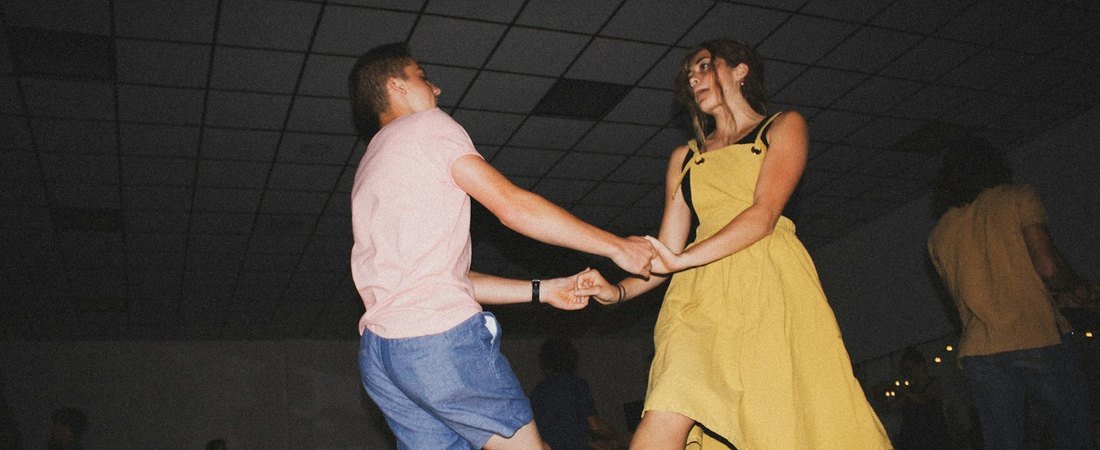
At its core, forró is a simple two-side step: step to one side, then the other, staying light on the balls of your feet. Partners dance in a close, connected embrace, with the lead’s chest guiding the follow’s movement rather than the arms doing the work, that connection, more than any fancy footwork, is what makes forró feel effortless once it clicks. Because the basic is so approachable, most people can dance their first full song within a single class, even if the turns and playful footwork take longer to master.
What to wear and bring
Comfortable, breathable clothing and shoes with a smooth (not sticky) sole are the only real requirements, sneakers with a lot of grip can make pivots harder on the knees. Dance floors get warm fast, so a change of shirt for later in the night is a common local habit. Beyond that, forró is genuinely low-gatekeeping: no partner, no special outfit, and no experience needed to show up to a beginner class.
If your only shoes are regular sneakers, the cheapest fix is a pair of stick-on suede soles that stick to shoes you already own and turn them smooth enough for pivots, before you commit to a dedicated pair. Stick-on suede dance soles on Amazon.ca, $28.99 CAD, rated 4.1 stars across more than 500 reviews.
Etiquette on the dance floor
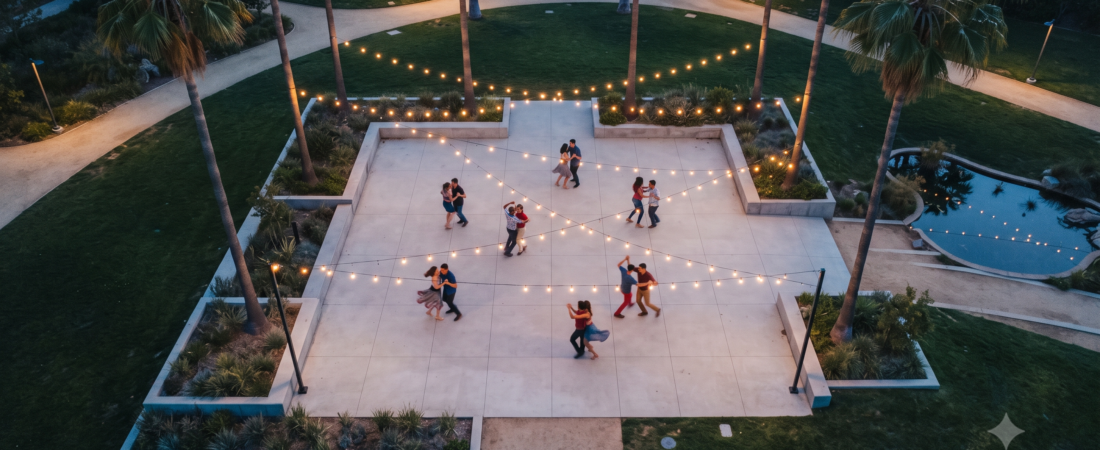
Forró is friendly by nature. It’s normal to dance with many partners through the night, to accept and decline invitations politely, and to keep the embrace comfortable for both people, a light, relaxed connection, not a tight grip. Eye contact and a nod are the usual way to ask; a simple “obrigado/a” (thank you) is the usual way to end a dance and move on to the next. Come with an open mind and a willingness to be led (or to lead) by someone you just met, that’s most of it.
How a rural dance went national
Forró’s first dance halls date to 19th-century Pernambuco, where the style drew on Portuguese, Galician and Indigenous dance traditions circulating in the countryside, according to research summarised on Wikipedia’s entry on the genre. It stayed a regional, rural tradition for decades. What changed that was Luiz Gonzaga, an accordionist from Pernambuco who, starting in the 1940s, took forró and its sibling rhythm baião out of the Northeast and onto national radio, becoming popular enough to earn the nickname “King of Baião,” a history documented by Bahia.ws. The wave of migration from the Northeast to Brazil’s bigger cities in the mid-20th century carried the dance with it, which is part of why forró now has a presence far outside the region that invented it, including the Canadian scene this guide covers.
Ready to try it in person? Our guide to where to dance forró in Canada covers the regular socials and beginner classes running across the country. If salsa or bachata is more your speed, our salsa vs. bachata guide breaks down the difference.
Frequently asked questions
What does each forró instrument do?
The accordion carries the melody and harmony, the zabumba (a two-headed bass drum) lays down the low pulse and syncopated accents, and the triangle keeps a steady, continuous subdivision on top. Together the three instruments are the entire rhythm section of a traditional forró band.
What does the word “forró” actually mean?
The most repeated explanation ties it to the English phrase “for all,” describing dances open to everyone. Linguists are skeptical of that origin story, but it is the version most commonly told in Brazil and abroad, and it captures the dance’s inclusive reputation either way.
Who is credited with making forró a national genre?
Luiz Gonzaga, an accordionist from Pernambuco, is the figure most credited with this. Starting in the 1940s, he took forró and baião from a regional, rural tradition to national radio, earning the nickname “King of Baião” in the process.
What is the difference between pé-de-serra and forró universitário?
Pé-de-serra is the traditional, acoustic roots sound. Forró universitário is a more polished, club-friendly style that spread through Brazilian university parties in the 1990s and 2000s. Most social dances in Canada draw on both.
Do I need a partner or experience to try forró?
No. Forró is built around approachability: no partner, no special outfit and no prior dance experience are needed to show up to a beginner class, and most newcomers can dance a full song after a single lesson.
Sources and method
Forró’s 19th-century origins in Pernambuco and its blend of Portuguese, Galician and Indigenous influences are drawn from Wikipedia’s entry on the genre. Luiz Gonzaga’s role in taking forró and baião national from the 1940s onward is documented by Bahia.ws. The breakdown of sub-styles, the basic step, and the etiquette notes throughout this guide reflect Raw POV’s own reporting on the Canadian social dance scene, not a single external source.
📚 Part of our guide: Latin & Brazilian Dance in Canada