UNESCO’s living heritage treaty has 185 States Parties, and Canada is not one of them. Across the 35 sovereign countries of the Americas, only three stay outside it: Canada, the United States and Guyana. That one fact decides who can put a dance, a song or a craft on the UNESCO list that heritage labels refer to.
When I wrote about the four Latin American dances on UNESCO’s heritage list in September, one question stayed open in my notes. Bachata, merengue, tango and Cuban rumba are there. Could anything from Canada ever join them? The answer sits one step before the list itself, in a table of signatures, and the table says no country can nominate anything until it has signed up.
The earlier piece on why bachata and tango are on the list and salsa is not explained that nominations come from States Parties. This one looks at who those States Parties are, and where Canada stands among its neighbours.
What the 2003 Convention is, and why the list depends on it
The Convention for the Safeguarding of the Intangible Cultural Heritage was adopted in Paris on 17 October 2003 and entered into force on 20 April 2006. UNESCO, which acts as depositary, publishes the official record of every country that has joined, with the date each one deposited its instrument and the type of instrument used. On the day we read it, the page gave the number of States Parties as 185.
The link to the famous list is written into the treaty. Article 16 sets up the Representative List of the Intangible Cultural Heritage of Humanity and says the Committee builds it “upon the proposal of the States Parties concerned”. In the text of the Convention, the nominating role belongs to the countries that have joined. A dance school, a festival or a city cannot file on its own.
So the question “why is nothing Canadian on the list” has a first answer that is procedural, not cultural. Canada does not appear in the table of States Parties, and UNESCO’s own page for the country says so directly: State not party to the 2003 Convention.
Canada, the United States and Guyana: the three outside it in the Americas
We checked the absence twice, because “not in the table” can also mean “the table did not load”. The depositary table rendered all 185 rows, from Afghanistan to Zimbabwe. In alphabetical order it runs Cabo Verde, Cambodia, Cameroon, Central African Republic. Canada would fall between Cambodia and Cameroon, and it is not there. The country pages for the United States and Guyana carry the same line as Canada’s.
Then we went through the Americas one country at a time. There are 35 sovereign states in the hemisphere. Thirty two of them are States Parties, which is 91.4 per cent. Every country of Latin America and the Caribbean except Guyana has joined, 32 of 33.
The same count works for the G7. France, Germany, Italy, Japan and the United Kingdom are States Parties. Canada and the United States are the two that are not. The most recent of the five to join was the United Kingdom, which deposited its ratification on 7 March 2024.
The table does not give reasons, and we did not find an official document that explains Canada’s position. This article does not guess at one. What the record shows is a date column with no Canadian entry, and that is where the reporting stops.
How early Latin America signed, country by country
Latin America did not sign as a bloc. The deposit dates are spread over thirteen years, and they say more when you line them up against the treaty’s own rule for coming into force.
Article 34 says the Convention enters into force three months after the thirtieth instrument is deposited. The thirtieth, by date, was Romania’s on 20 January 2006, and three months later is exactly 20 April 2006. Four of those first thirty came from Latin America and the Caribbean: Panama, Dominica, Peru and Mexico. Panama, on 20 August 2004, was the fifth country in the world to deposit, after Algeria, Mauritius, Japan and Gabon.
Brazil came shortly after the threshold. Its ratification is dated 1 March 2006, a date confirmed both in the depositary table and on Brazil’s own page on the Convention site. That is 50 days before the treaty entered into force, and 18 years before the United Kingdom joined. Bolivia deposited one day earlier, on 28 February 2006.
The countries behind the four Latin dances on the list all joined within one stretch of 293 days. Argentina deposited on 9 August 2006, the Dominican Republic on 2 October 2006, Uruguay on 18 January 2007 and Cuba on 29 May 2007. The inscriptions themselves came much later, between 2009 and 2019. Joining was the first step in each case, never the last.
For a sense of the range, here are some of the dates as the depositary table prints them:
- Mexico: 14 December 2005
- Costa Rica: 23 February 2007
- Colombia: 19 March 2008
- Chile: 10 December 2008
- El Salvador: 13 September 2012
- Suriname: 5 September 2017, the most recent in the region
What the treaty does not measure
None of this says that Canada lacks living heritage or that nobody looks after it. The same UNESCO page that marks Canada as a non party lists 12 Canadian organisations accredited to act in an advisory capacity to the Convention’s Committee (Article 9), among them the Heritage Foundation of Newfoundland and Labrador, Heritage Saskatchewan and the Conseil québécois du patrimoine vivant. Accreditation and membership are different things, and the page shows both.
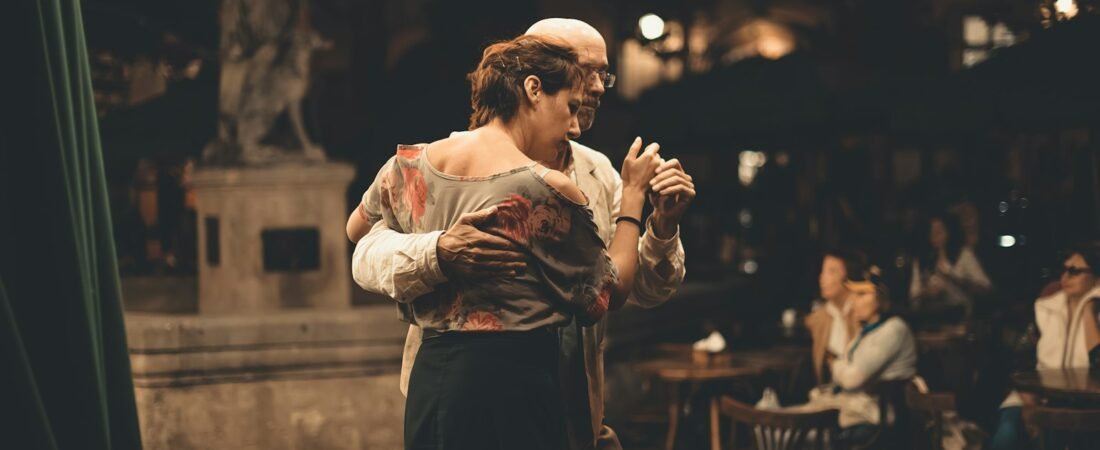
It also says nothing about how a dance is lived. Toronto’s calendar runs on practice, not paperwork. The city’s milongas keep the tango going whether or not anyone mentions a treaty, and the same is true of forms that have no UNESCO file anywhere, like the West Coast Swing classes that run five nights a week. The list records which governments filed which nominations, and won. It is not a ranking of what people dance.
The people doing the dancing are not few, either. Statistics Canada counted 726,820 people of Latin American origin in Canada in 2021, although, as we have reported, the agency publishes two different counts of the same population depending on the definition used. Many of them come from countries that are States Parties. Brazil’s forró is not on the UNESCO list, but it holds a national registration in Brazil, a process of more than ten years told in the September piece. Our guide to where to dance forró in Canada covers the practice.
The practical reading for anyone who sees a “UNESCO heritage” label on a class or a festival: the label belongs to a specific inscription filed by a specific State Party. You can check it on UNESCO’s element pages in under a minute. And if the practice is Canadian, the treaty that would allow a nomination has not yet been joined.
Frequently asked questions
Is Canada a party to the UNESCO Convention on intangible cultural heritage?
No. Canada does not appear in UNESCO’s table of States Parties to the 2003 Convention, and UNESCO’s country page for Canada says “State not party to the 2003 Convention”.
Can Canada nominate something to the UNESCO intangible heritage list?
Under Article 16 of the Convention, the Representative List is built on proposals from States Parties. Canada is not a State Party, so under the treaty text it does not have a nominating role.
Which countries in the Americas have not joined the 2003 Convention?
Three of the 35 sovereign countries of the Americas: Canada, the United States and Guyana. The other 32 are States Parties.
When did Brazil join the UNESCO intangible heritage Convention?
Brazil deposited its ratification on 1 March 2006, 50 days before the Convention entered into force on 20 April 2006.
Sources and method
From the sources. The number of States Parties (185), the adoption and entry into force dates, and every deposit date in this article come from UNESCO’s depositary page for the Convention, read on 14 October 2026. The statement that Canada, the United States and Guyana are not party comes from each country’s page on ich.unesco.org. Brazil’s date was checked on both the depositary table and Brazil’s country page, which agree. Articles 9, 16 and 34 are quoted or paraphrased from the Convention text published by UNESCO. The 12 accredited Canadian organisations are counted from the Canada country page. The 726,820 figure is from Statistics Canada’s June 2026 portrait, as reported in our earlier article.
Raw POV analysis. UNESCO does not publish the following, which are our own counts and arithmetic from its table: 32 of 35 countries of the Americas (91.4 per cent) and 32 of 33 in Latin America and the Caribbean; 5 of 7 G7 members; the identity of the thirtieth instrument (Romania) by sorting the table by date; the four Latin American and Caribbean states among the first thirty; Panama as the fifth depositor worldwide; the 50 days between Brazil’s ratification and entry into force; the 18 years between Brazil and the United Kingdom; and the 293 days between Argentina’s and Cuba’s deposits. Our list of 35 sovereign states of the Americas counts the 33 countries of Latin America and the Caribbean plus Canada and the United States.
What the data cannot show. The table records who joined and when. It does not record why any country has or has not joined, and we found no official document explaining Canada’s position. The number of States Parties changes when a new country deposits, so the counts here are true as of the date above.