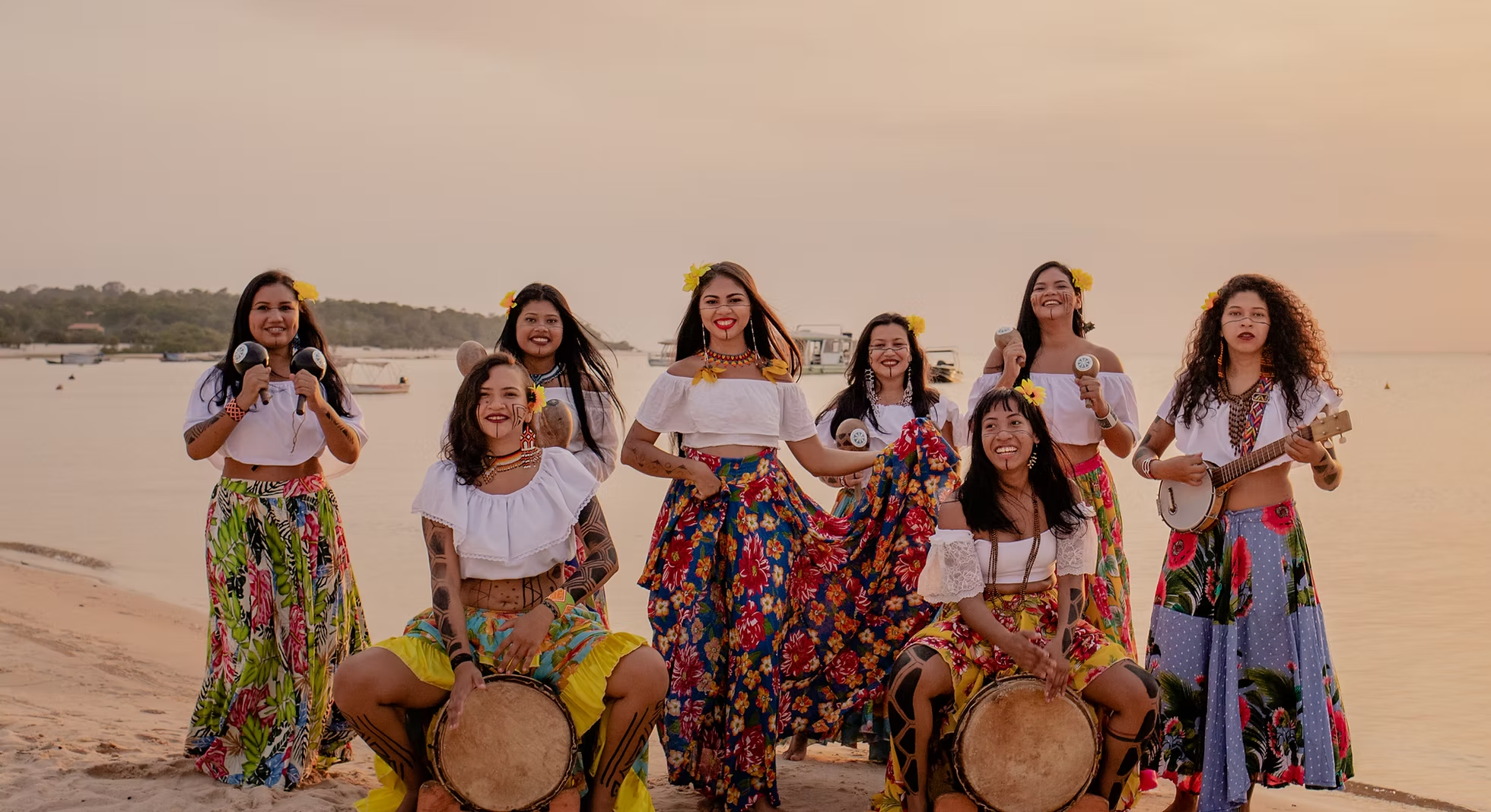
Suraras do Tapajós, the first carimbó group made up entirely of Indigenous women, played a rare Canadian date at a small Toronto club in July 2026. The group’s story, and the genre they carry, run deeper than a single tour stop.
The vibrant pulse of the Amazon rainforest arrived in Toronto as Suraras do Tapajós brought their unique brand of resistance and rhythm to the city. Known as the first all-female indigenous carimbó group in history, this collective is a powerful force in contemporary world music, and their July stop in Toronto marked a rare Canadian date for a group more often heard along the riverbanks of the Amazon.
Who are Suraras do Tapajós?
Hailing from Alter do Chão, Pará, Brazil, the group originated from the Associação de Mulheres Indígenas Suraras do Tapajós. Their name, “Surara,” translates to “warrior” in the Indigenous Nheengatu language, a fitting title for an ensemble that uses music as a platform for activism.
- Musical Style: They perform carimbó, a traditional Amazonian genre featuring hypnotic percussion, maracas, and banjo.
- The Mission: Their performances are deeply rooted in social and environmental advocacy, raising awareness about Indigenous rights, land preservation, and the protection of the Amazon.
- International Impact: Having performed at major global stages and festivals, they represent a new wave of Brazilian Indigenous art that blends ancestral wisdom with modern socio-political commentary.
The group, by the numbers
| Founded | 2018, Alter do Chão, Pará, Brazil |
| Members | Nine, all Indigenous women from the Lower Tapajós region |
| Languages sung | Portuguese and Nheengatu |
| Debut album | kirībasáwa Yúri Yí-tá, A Força Que Vem Das Águas (2021), funded under Brazil’s Lei Aldir Blanc cultural support law |
| Notable stages | RecBeat; Rock in Rio 2024, Global Village stage |
| Toronto date | 9 July 2026, 8:00 PM, Drom Taberna, part of Sunfest programming, pay-what-you-can |
Sources: Portuguese Wikipedia entry for Suraras do Tapajós (citing Amazônia Real, EBC and Brasil De Facto reporting) and the Drom Taberna event listing for the Toronto date.
Where the sound comes from: Alter do Chão and carimbó
Alter do Chão sits on the banks of the Tapajós River in the Brazilian Amazon, a village long known for its freshwater beaches and, more recently, as a hub for Indigenous and riverine (ribeirinho) cultural organizing. Carimbó itself traces back to Afro-Indigenous communities along Pará’s coast and river basins, blending Indigenous rhythms and instruments with influences brought by enslaved and free Black communities centuries ago, making it, like forró and samba in other parts of Brazil, a genre built at the intersection of Indigenous and African heritage. What makes Suraras do Tapajós distinct is both the “all-female” framing, uncommon in a genre historically dominated by male performers, and the group’s explicit tie to a formal Indigenous women’s association rather than a purely commercial band.
From the Tapajós to Rock in Rio
The group’s reach has grown well beyond the Amazon since its founding. Their 2021 debut album, kirībasáwa Yúri Yí-tá, A Força Que Vem Das Águas, was produced with support from Brazil’s Lei Aldir Blanc, a federal cultural emergency fund created during the pandemic. Three years later, the group performed on the Global Village stage at Rock in Rio 2024, one of the world’s largest music festivals, where members used the platform to speak about Indigenous land rights. That trajectory, from a women’s association in a river village to one of the biggest stages in Brazilian music, is part of what makes a small club date in Toronto notable: it is the same group, the same nine women, the same advocacy, in front of a very different audience.
The Toronto performance
Suraras do Tapajós performed in Toronto on July 9, 2026, at 8:00 PM at Drom Taberna (458 Queen St W), as part of their 2026 Canadian tour and Sunfest programming, a rare opportunity for Toronto audiences to see an Amazonian Indigenous women’s collective perform live rather than through a screen. The show was listed as pay-what-you-can, in keeping with Sunfest’s programming at the venue.
Why this performance matters
The appearance of Suraras do Tapajós in Toronto offered a rare opportunity to witness how traditional music serves as a living, breathing tool for survival and cultural identity. For a city with one of Canada’s fastest-growing Latin American communities, dates like this one point to a broader pattern Raw POV has tracked across our coverage: Indigenous and Afro-Latin American artists increasingly finding audiences and venues in Canada, not just at large festivals but at neighbourhood venues like Drom Taberna. For those interested in world music, Brazilian culture, or Indigenous-led social justice movements, performances like this one serve as a bridge between the Amazonian territory and the Canadian cultural landscape, and a reminder to watch local listings for the next time a touring Amazonian act comes through town. Our coverage of how Latin American culture is reshaping Canada’s cultural landscape traces the wider pattern this show fits into, and our piece on Brazilian songwriter Joyce Moreno covers another artist carrying Brazilian musical tradition to international stages. Readers looking for more partner dance traditions from Brazil in Canada can also see our guide to where to dance forró in Canada.
Frequently asked questions
Who are Suraras do Tapajós?
Suraras do Tapajós are a nine-member Indigenous women’s carimbó group founded in 2018 in Alter do Chão, Pará, Brazil. They are considered the first carimbó group composed entirely of Indigenous women.
What is carimbó?
Carimbó is a traditional Amazonian music and dance genre from Pará, Brazil, built on hypnotic percussion, maracas and banjo, blending Indigenous rhythms with influences brought by enslaved and free Black communities.
When and where did Suraras do Tapajós play in Toronto?
They performed on 9 July 2026 at 8:00 PM at Drom Taberna (458 Queen St W, Toronto), as part of the venue’s Sunfest programming, on a pay-what-you-can basis.
What language do Suraras do Tapajós sing in?
They sing in Portuguese and in Nheengatu, an Indigenous language spoken in the Lower Tapajós region of the Brazilian Amazon.
Has the group performed at major festivals before?
Yes. Suraras do Tapajós has performed at RecBeat and, in 2024, played the Global Village stage at Rock in Rio, one of the world’s largest music festivals.
Sources and method
Biographical details, founding year, membership and festival history are drawn from the group’s Portuguese-language Wikipedia entry, which cites reporting by Amazônia Real, EBC and Brasil De Facto, among others. Details of the Toronto date, time, venue and ticket format come from the Drom Taberna event listing. The framing connecting this show to broader patterns in Latin American and Indigenous cultural presence in Canada is Raw POV’s own analysis. No fact in this article has been estimated or invented.