As an Amazon Associate, Raw POV earns from qualifying purchases made through links in this article.
Toronto has one of the longer-running Argentine tango scenes in North America, but 2026 is an unusual year for it: one long-standing festival has paused, a new one has moved in, and the FIFA World Cup has reshuffled the calendar.
Toronto has one of the longer-running Argentine tango scenes in North America, decades-old classes, weekly milongas, and, in most years, an international festival. But 2026 is an unusual year for the city’s tango dancers: one long-standing festival has paused, a new one has moved in, and the FIFA World Cup has reshuffled the calendar. Here’s what Argentine tango actually is, how to take your first class, and where the community dances right now.
What makes it “Argentine” tango
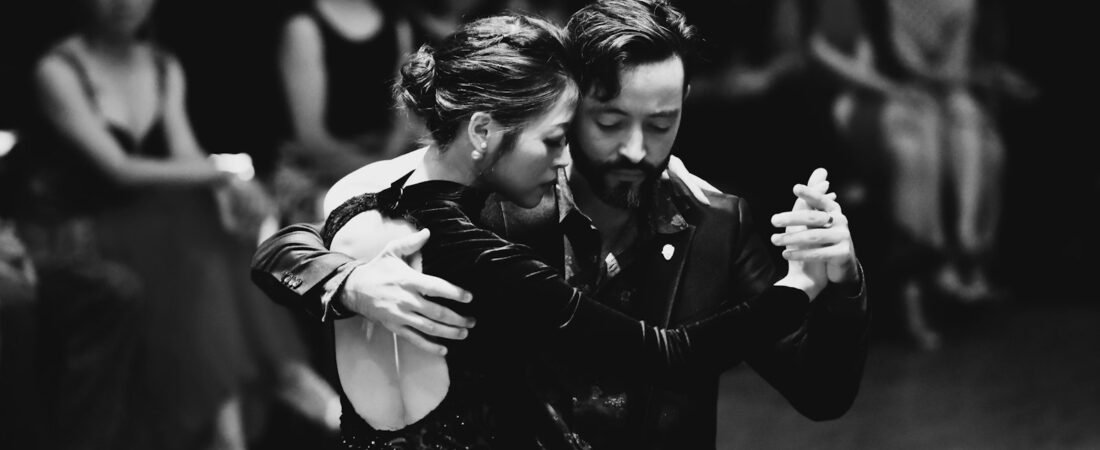
Argentine tango is often confused with the more rigid, competition-style “ballroom tango” seen on TV dance shows. The Argentine version is different at its core: it’s improvised rather than choreographed, built around a close embrace and a shared “walk” rather than a fixed sequence of steps. Instead of memorizing routines, dancers lead and follow through continuous physical connection, which is why most schools spend the first several classes purely on walking, posture, and embrace before introducing turns or ornamentation.
Where to take a beginner class
Toronto has several dedicated tango schools, and none of them require you to show up with a partner. Argentine Tango Toronto, run by Bulent Karabagli and Lina Chan at 206 Beverley St., runs Level 1 and 2 classes on Monday and Wednesday evenings from 7:00 to 8:15 p.m., plus an intensive weekend program for absolute beginners on Saturdays and Sundays from 1:00 to 4:00 p.m. Across town, City Dance Corps explicitly designs its tango classes for solo learners, with guided instruction and partner rotation, and runs a Friday evening practica from 7:30 to 9:30 p.m. for students who want to drill what they’ve learned outside of class.
One gear note for new students: tango’s pivots and close-embrace footwork are much smoother in shoes with a suede sole than in regular sneakers, which grip the floor and strain the knees mid-turn. A budget way to test that without committing to dedicated tango shoes is a pair built with that sole already on. Suede-sole dance shoes on Amazon.ca, rated 4.2 stars across 220 reviews.
Where to dance socially: the milonga
A “milonga” is both the name of a social tango dance and the event where it happens, the place where beginners eventually put classroom steps into real, unscripted dancing. Toronto’s biggest is Milonga Ocho, held at 206 Beverley St. every 2nd Saturday and 4th Friday of the month (occasionally shifting to a 1st or 3rd Friday around holidays), running 9:00 p.m. to 1:00 a.m. for a $20 cash cover. Beyond that flagship night, community-run milongas and practicas rotate through dance studios, church halls, and community centres across the city on other nights of the week, enough that a dedicated dancer can usually find somewhere to dance more than once a week without repeating a venue.
Tango etiquette: the cabeceo and the ronda
Tango has its own, fairly universal social code, and knowing it before your first milonga saves a lot of awkwardness. Invitations to dance are traditionally made with the “cabeceo”, sustained eye contact and a small nod from across the room, accepted with a nod back, rather than walking up and asking out loud. On the floor, couples move counter-clockwise around the room in a lane system called the “ronda,” and passing or cutting across other couples’ lanes is considered a serious breach of floor etiquette. Both customs exist for the same practical reason: with dozens of couples moving in a tight, dimly lit room, a shared, quiet system of consent and traffic flow is what keeps a milonga from turning into a collision course.
A packed, and disrupted, calendar for 2026
This year highlights just how much a single event can reshape a local dance scene. The Toronto Tango Festival, billed as the longest-running Argentine tango event in the city, cancelled its 2026 edition entirely, citing the FIFA World Cup’s effect on venue availability, accommodation costs, and general city logistics during tournament season; organizers say they plan to return in 2027. In its place, Toronto’s tango calendar still has two major events this year: La Promesa, a new festival from Calle del Tango spotlighting emerging artists and rising champions, runs July 30 to August 3 over the Civic Holiday long weekend, while Tango 8 Fest, also organized by Bulent Karabagli and Lina Chan, returns September 23 to 27 with nine milongas and more than 20 workshops led by touring maestros from Buenos Aires.
Toronto’s 2026 tango calendar, at a glance
| What | Details |
|---|---|
| Beginner classes | Argentine Tango Toronto, Mon/Wed 7:00-8:15 p.m., or weekend intensives; City Dance Corps, solo-friendly, Friday practica 7:30-9:30 p.m. |
| Flagship milonga | Milonga Ocho, 206 Beverley St., 2nd Saturday and 4th Friday monthly, 9:00 p.m.-1:00 a.m., $20 cash |
| Toronto Tango Festival | Cancelled for 2026 due to World Cup scheduling conflicts; organizers plan to return in 2027 |
| La Promesa (new) | 30 July-3 August 2026, Civic Holiday weekend |
| Tango 8 Fest | 23-27 September 2026, 9 milongas, 20+ workshops with instructors from Buenos Aires |
Source: each event’s or school’s own site, as cited throughout this article.
Curious about other partner dances with a following in Toronto? Our guides to salsa and bachata and Brazilian forró cover the basics of two more communities that share the city’s dance floors, and our piece on how Latin American culture is reshaping Canada’s cultural landscape traces the wider pattern these dance scenes fit into.
Frequently asked questions
Do I need to know Argentine tango already to take a beginner class in Toronto?
No. Both Argentine Tango Toronto and City Dance Corps design their beginner classes for people with no prior experience, and neither requires you to arrive with a partner.
What is a milonga?
A milonga is both the name of the social tango dance and the event where it happens. Toronto’s largest is Milonga Ocho, held twice monthly at 206 Beverley St.
Is there a tango festival in Toronto in 2026?
The long-running Toronto Tango Festival cancelled its 2026 edition over World Cup-related venue and cost pressures, but two other events are running: La Promesa (30 July-3 August) and Tango 8 Fest (23-27 September).
What is the “cabeceo”?
The cabeceo is the traditional way tango dancers invite each other to dance: sustained eye contact and a small nod from across the room, accepted with a nod back, rather than a spoken invitation.
Why did the World Cup affect Toronto’s tango calendar?
The Toronto Tango Festival’s organizers cited the FIFA World Cup’s effect on venue availability, accommodation costs and general city logistics during tournament season as the reason for cancelling the 2026 edition.
Sources and method
Class schedules and milonga details come from the schools’ own sites: Argentine Tango Toronto, City Dance Corps, and Milonga Ocho. The 2026 festival calendar is drawn from the organizers’ own announcements: Toronto Tango Festival, La Promesa, and Tango 8 Fest. The summary table is Raw POV’s own compilation of those sourced listings. No fact in this article has been estimated or invented.
📚 Part of our guide: Latin & Brazilian Dance in Canada