

In immigrant households, it is often the child who speaks the new language first, and ends up translating far more than words. Toronto psychotherapist Juliana Silva sees it in her practice: kids who explain not just what the teacher said, but how an entire school system works, to parents still reading the room through the culture they left behind.
Statistics Canada has a name for part of this. In families where both parents were born abroad and share the same immigrant mother tongue, 24.4% of children speak only an official language at home, versus just 2.5% of their parents. Statistics Canada itself calls that “a percentage 10 times higher than their parents.”
That number describes a language gap. It does not describe what happens inside the living room when the gap opens up. Raw POV has looked before at how language slips away across generations, in that case Spanish fading by the third generation. This time, we asked what happens while the gap is still open: Juliana Silva, a Registered Psychotherapist who works with immigrant families, including Brazilian ones, navigating exactly this.
The language gap, by the numbers
2.5% of their parents do.
That is the gap that puts a child in the translator’s seat. The full breakdown, official language versus the parents’ original one:
| Speak only an official language at home | Speak only a non-official language at home | |
|---|---|---|
| Children (immigrant background, both parents same non-official mother tongue) | 24.4% | 22.3% |
| Their parents | 2.5% | 33.5% |
Source: Statistics Canada, 2016 Census. The pattern covers roughly 2.2 million children under 15 with an immigrant background, 37.5% of all children in Canada that year.
A meeting about homework becomes a meeting about two cultures
Silva described a session, details altered so no one is identifiable. A family recounted a parent-teacher meeting. The parents struggled with some of the English being explained to them, so their child stepped in, translating not just the teacher’s words but the logic behind them.
“The child was explaining to the parents that, in their current school, there was not the same expectation to study at home or prepare for tests in the way they had experienced in Brazil,” Silva said. “At one point, the child was essentially saying, ‘Here, I don’t have to study as much at home because the school doesn’t require it in the same way.’”
The child was not wrong about the school. But the parents were reading the moment through a different lens, one where a structured study routine was what doing well looked like. “From the parents’ perspective, the child’s behavior could look like a lack of responsibility. From the child’s perspective, it made sense because they were responding to what the school was actually asking of them,” Silva said.
“The child was not simply translating language for their parents. They were also, in a way, translating the new educational culture.”
Juliana Silva
Her role in the room shifted with it. Less about deciding who was right. More about helping the family “negotiate two different ideas of responsibility, discipline, and academic success.”
Academic work on child language brokering backs up that reframe. A 2022 study in Children & Society by researchers Sarah Crafter and Humera Iqbal argues the practice should be read as a normal family caregiving role, not evidence of a child pushed into adulthood too soon. The real strain, they found, comes from a hostile surrounding context, not from the act of translating itself.
The study is qualitative, based on 29 young people aged 13 to 16 in three London, UK schools. It is not a claim about how common the experience is elsewhere. But its framing is the same one Silva reached for independently, from a Toronto consulting room: what looks like a burden from outside can double as a source of real skill from inside.
What the coverage usually skips
Most reporting on immigrant children asks what they lose. Silva pushed back on the frame itself.
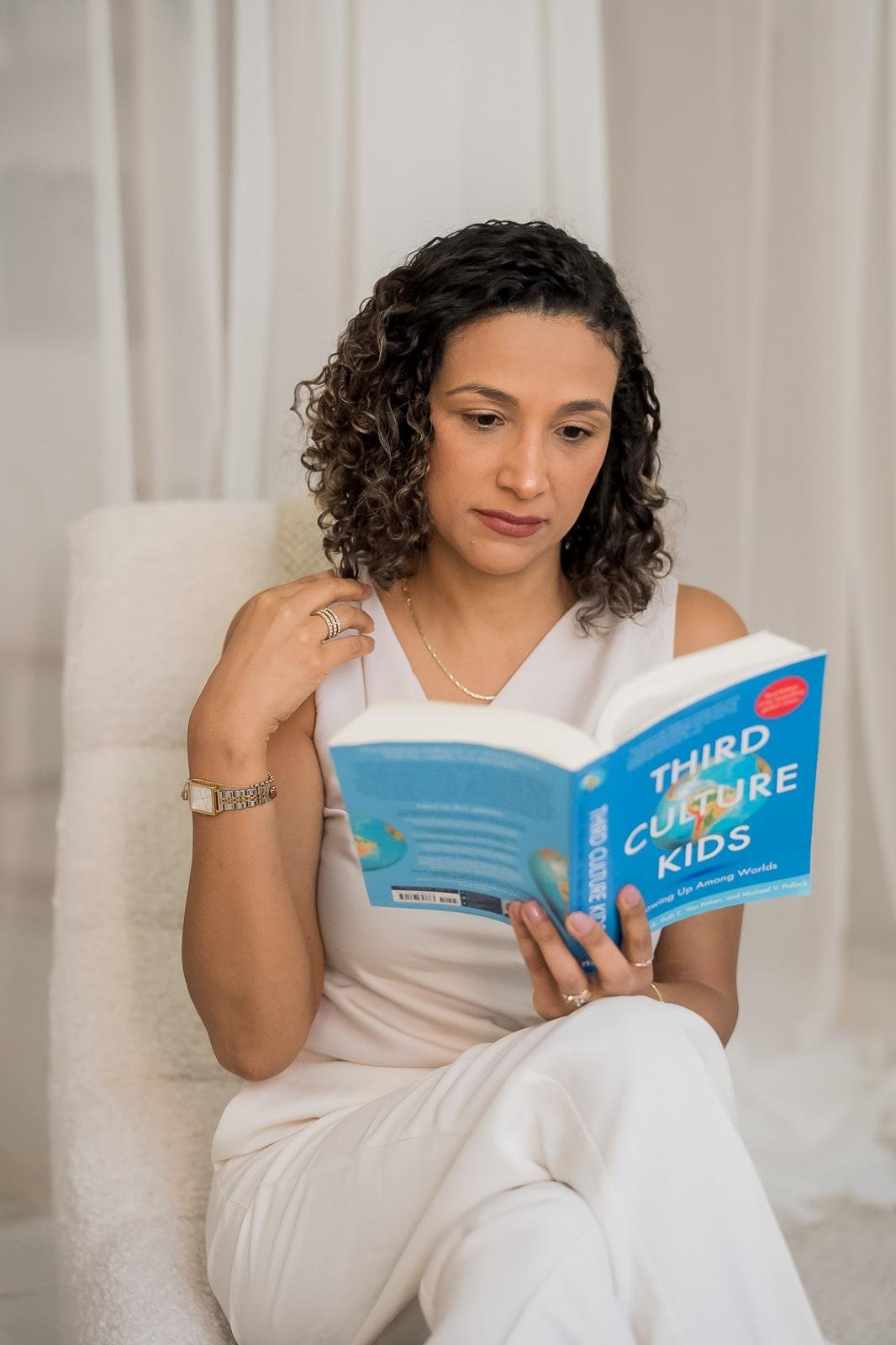
“One of the biggest things immigrant children can gain is the ability to navigate between different worlds,” she said. “They learn, often very early, that there isn’t always just one way of doing things.”
In her work with Cross-Cultural Kids, and from living in Toronto herself, she sees children in multicultural households grow more comfortable noticing difference without treating it as a problem. They develop flexibility, and the ability to hold more than one perspective at once.
She was careful not to romanticize it. “These gains are not automatic. A lot depends on the child’s environment, the support they receive, and how the adults around them help them make sense of their experiences,” she said.
“And those gains don’t erase the losses. Belonging, for example, can be complicated.” A child who settles in one place long-term may build a strong sense of belonging there. A child who moves between countries repeatedly may struggle to feel it fully anywhere.
“I wouldn’t say that immigrant children simply gain or lose something. They experience both. But with the right support, the ability to navigate differences, hold multiple perspectives, and build connections across cultures can become a real strength, one that we often don’t count when we talk about what children lose through migration.”
Juliana Silva
FAQ
What is child language brokering?
It is when a child translates language, and often cultural context, for their immigrant parents, in settings like school meetings, medical appointments, or everyday paperwork.
Is language brokering harmful to children?
Research is mixed and depends heavily on context. A 2022 study in Children & Society argues it is better understood as a normal caregiving role within the family than as a sign of a child forced to grow up too fast, though it studied a UK population, not a Canadian one.
How common is it for immigrant children to translate for their parents?
Statistics Canada’s 2016 Census found that in families where both parents share the same immigrant mother tongue, 24.4% of children speak only an official language at home, compared with 2.5% of parents, a gap that creates the conditions for language brokering.
Who is Juliana Silva?
Juliana Silva is a Registered Psychotherapist (RP), registered with the College of Registered Psychotherapists of Ontario (CRPO), practicing in Ontario, Canada. She works with children, adolescents, and adults navigating the emotional impact of immigration, including Brazilian families.
Sources and method
The 2016 Census figures (24.4% of children versus 2.5% of parents speaking only an official language at home; 22.3% versus 33.5% for a non-official language only; the 2.2 million children figure) come from Statistics Canada’s Census in Brief, “Children with an immigrant background: Bridging cultures” (catalogue 98-200-X2016015). These are 2016 Census figures; Statistics Canada’s 2021 multilingualism analysis (98-200-X2021014) does not publish the same parent-versus-child cross-tabulation, so we are not claiming this gap for 2021.
The academic framing on language brokering as a family caregiving practice comes from Crafter, S., & Iqbal, H. (2022), “Child language brokering as a family care practice: Reframing the ‘parentified child’ debate,” Children & Society, 36(3), 400-414 (DOI: 10.1111/chso.12485). That study is qualitative, based on 29 young people aged 13 to 16 across three London, UK schools. It supports the conceptual reframe in this piece, not any claim about prevalence in Canada or in Brazilian families specifically.
Juliana Silva answered Raw POV’s questions in writing; her responses are lightly edited here only for length and clarity, not for content. Disclosure: Juliana Silva is personally known to a member of Raw POV’s editorial team, which is why this interview came together. No clinical case details identify any real family; the example in this piece has been altered so no one can be recognized.
For more on Juliana Silva’s published work, follow her on Instagram.
This story sits inside a broader shift: Latin American culture reshaping the Canadian mosaic, one household negotiation at a time.